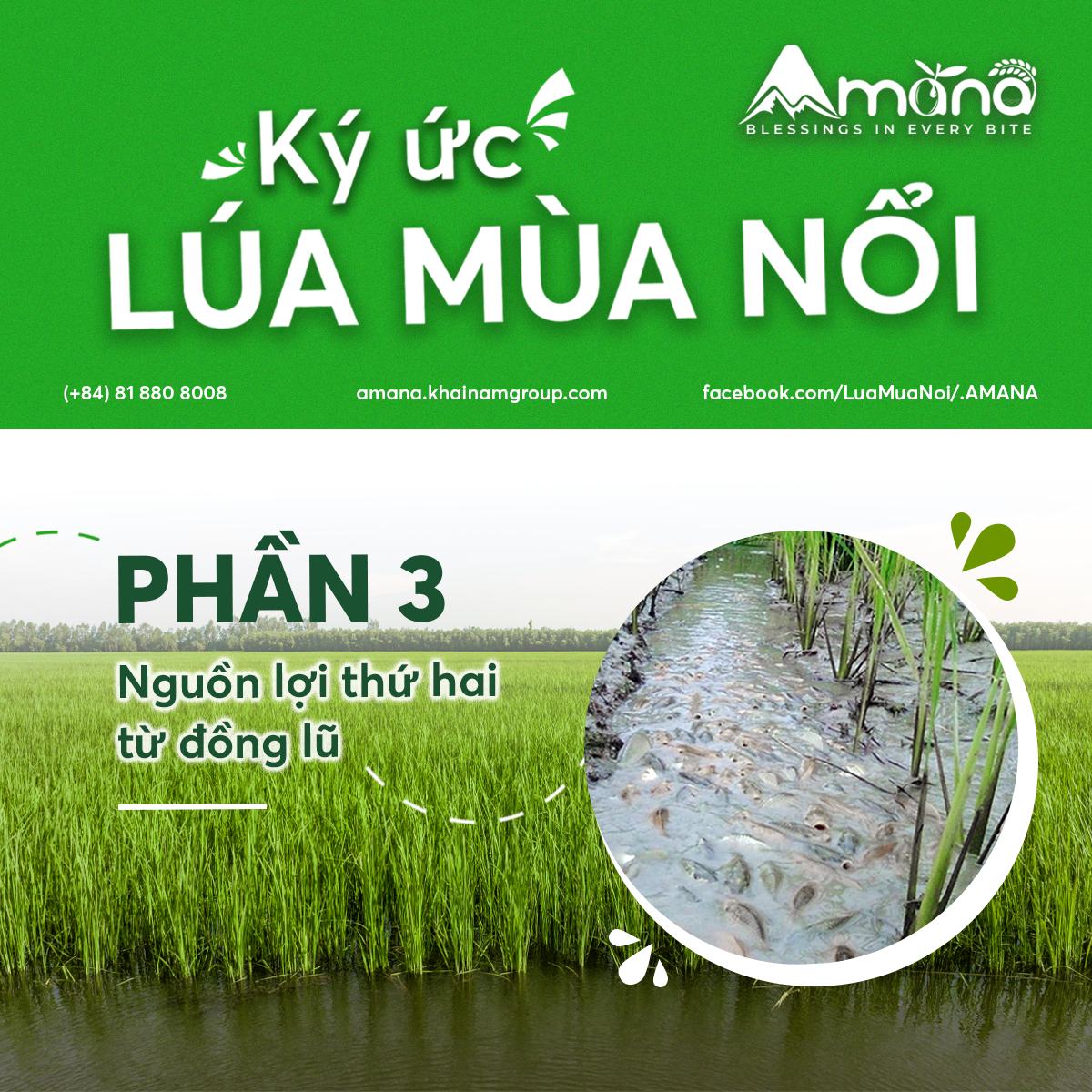
PART 3 — THE SECOND GIFT FROM THE FLOODED FIELDS
🌾 Beyond providing rice that sustains livelihoods, floating rice fields also offer another invaluable resource: aquatic produce during the flood season.
🌾 In wetland ecosystems where floating rice grows alongside aquatic vegetation, a rich and balanced natural environment is formed.
💦 As floodwaters arrive, fish and shrimp follow canals and waterways into the fields, where they feed and grow among the rice plants. This is also the farmers’ slack season, when they temporarily set aside cultivation and turn to fishing as a source of income.
From casting nets and lines, setting shrimp traps and eel pots, to simple bamboo fishing rods — every method helps improve household meals, with any surplus sold at local markets.
💦 When floodwaters begin to recede around the tenth lunar month, aquatic species gather and flow back toward the rivers.
This period is known locally as the “fish migration season” — the most important fishing time of the year. Together with the floating rice harvest, it represents a generous gift from nature to the people of the Mekong Delta.
💛 After 1975, especially following the major flood of 1978 that submerged vast areas of floating rice, food shortages became increasingly severe. In response, the government implemented policies such as dike construction, increased cropping cycles, and high-yield rice cultivation, rapidly transforming the Mekong Delta from food insecurity to self-sufficiency and eventually to a major rice exporter.
💛 Along with these changes, floating rice gradually faded into memory. Fishing on flooded rice fields — once a way of life for generations — is no longer a primary livelihood. Yet it has never completely disappeared and is now being studied and revived within the context of ecological and sustainable agriculture.
Each flood season, the fields once again evoke memories of a harmonious ecosystem — a time when people lived in rhythm with the waters and received nature’s abundance.
👉 Floating rice is not merely a memory, but a valuable resource for clean and sustainable agriculture in today’s Mekong Delta.
Source: Compiled
——–
🔸Web: https://amana.khainamgroup.com
🔸Mail: amana@khainamgroup.com